%20of%20webynetwork%20logo.png)


![How Trustofy Can Help You Manage Your Online Reputation [Review]](https://static.wixstatic.com/media/e17a16_d398ccf468af445aa96414f63571c0c4~mv2.png/v1/fill/w_1268,h_768,fp_0.50_0.50,q_35,blur_30,enc_avif,quality_auto/e17a16_d398ccf468af445aa96414f63571c0c4~mv2.png)
![How Trustofy Can Help You Manage Your Online Reputation [Review]](https://static.wixstatic.com/media/e17a16_d398ccf468af445aa96414f63571c0c4~mv2.png/v1/fill/w_284,h_172,fp_0.50_0.50,q_95,enc_avif,quality_auto/e17a16_d398ccf468af445aa96414f63571c0c4~mv2.png)


Role of Artificial Intelligence in Shaping Future Industries
- Nov 28, 2025
- 17 min read

The rapid advancement of technology in recent years has sparked significant changes across various industries. One of the most notable innovations that continue to revolutionize the way we live and work is artificial intelligence (AI). As we look toward the future, we must understand AI's pivotal role in shaping industries and driving unprecedented growth and efficiency in revolutionizing various industries that once seemed impossible to change, from healthcare and finance to manufacturing and entertainment. The potential of AI to streamline processes, analyze vast amounts of data, and automate tasks is reshaping the landscape of countless industries. This powerful technology is not just a buzzword; it's a transformative force that holds the key to unlocking new opportunities and driving unparalleled innovation. As businesses and organizations embrace AI-driven solutions, they are poised to achieve a competitive edge and adapt to the evolving demands of the modern world.
In this blog, we will explore AI's multifaceted impact on various industries and how it revolutionizes operations, improves customer experiences, and paves the way for a future driven by intelligent automation. Join us on this insightful journey as we unravel AI's role in shaping the future of industries.
Here are several ways in which AI is expected to impact and revolutionize industries:
Artificial Intelligence (AI) is expected to play a pivotal role in shaping various industries in the future.
Here's a breakdown of how AI may influence different sectors:
Healthcare
Diagnostic Automation
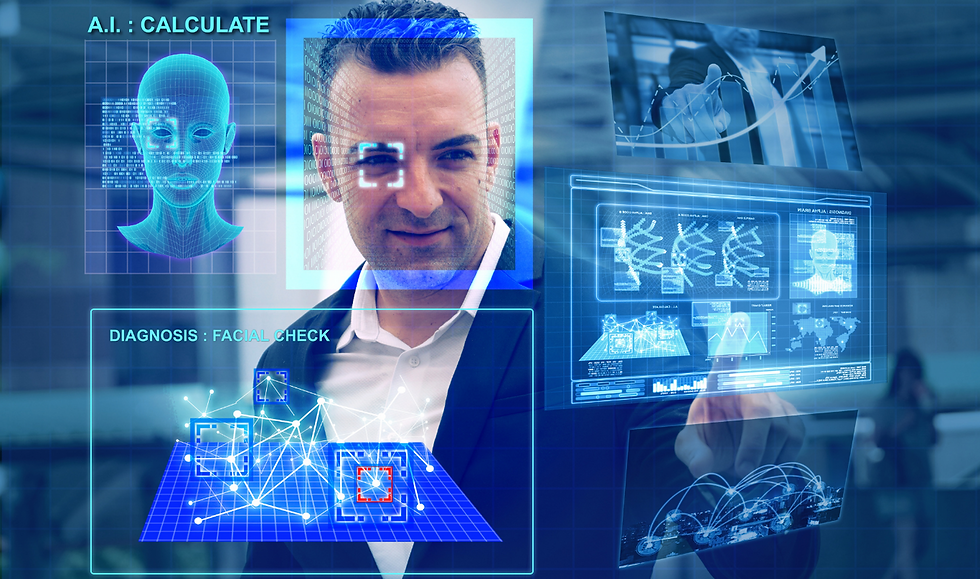
One of the most revolutionary applications of AI in healthcare is diagnostic automation. AI algorithms, especially those based on machine learning, possess the capacity to handle complex data analytics. They have proven exceptionally adept at interpreting medical images, such as X-rays, CT scans, and MRIs. An AI system can assist radiologists by highlighting areas of concern, potentially detecting signs of diseases such as cancer at an earlier stage when they are more treatable.
These systems can also analyze genetic information alongside a patient's clinical history to identify the potential risk of genetic disorders. As AI technology in diagnostic automation advances, it is expected to enhance early detection rates of various diseases, thus improving patient outcomes and reducing the burden on healthcare systems.
Personalized Medicine
AI is also enabling a shift towards personalized medicine. It analyzes enormous quantities of patient data, including genetic makeup, lifestyle, and response to previous treatments, allowing medical professionals to customize their approach to individual patient care.
By applying AI algorithms, healthcare providers can develop more effective personalized treatment plans that reflect each patient's unique circumstances. This aspect of AI contributes to a more targeted and effective treatment strategy. It might eventually lead to advancements in the battle against diseases that currently follow more standardized (and less personalized) treatment methodologies.
Drug Discovery
Another significant area where AI transforms healthcare is drug discovery and development. The traditional process of bringing a new drug to market is extremely costly and time-consuming, often taking over a decade. AI can significantly accelerate this process by predicting how different drugs will interact with various targets in the body or by identifying potential candidates for drug repurposing.
AI-driven platforms can help researchers understand complex chemistry, simulate outcomes, and streamline the initial drug design and screening phases. AI can potentially speed up drug discovery by reducing research time and predicting drug effectiveness, thus cutting R&D costs.
As a whole, AI is a transformative force in healthcare, offering to improve both the efficiency of care and patients' health outcomes. Nevertheless, the successful adoption of AI in the healthcare sector must address privacy, security, and ethical concerns related to patient data and the role of AI in making potentially life-altering medical decisions.
Automotive

Autonomous Vehicles
Artificial Intelligence is at the forefront of the revolution in the automotive industry, primarily through the development of autonomous vehicles—cars and trucks that use AI to navigate and operate without human input. Self-driving technology relies heavily on sensors, cameras, and radar systems paired with sophisticated AI algorithms that process the captured data to make real-time driving decisions. Effectively, these systems form a virtual driver who can perceive surroundings, predict the behavior of other road users, and swiftly react to avoid accidents and navigate safely.
AI drives the continuous improvement of autonomous vehicle systems, enhancing their ability to deal with complex traffic scenarios, changing weather conditions, and unpredictable road environments. As the technology matures, it promises personal convenience and safer roads, as human error is a leading cause of traffic accidents.
Predictive Maintenance
Another significant contribution of AI in the automotive industry is predictive maintenance. Vehicle sensors can monitor various components during operation and relay this data to AI algorithms that predict when parts may fail or need service. Anticipating maintenance can reduce downtime and prevent costly repairs while extending the vehicle's lifetime.
Predictive maintenance goes beyond routine check-ups; it's an intelligent system that saves consumers money and keeps vehicles in optimal condition. Furthermore, this AI-driven approach is invaluable for fleet operators who manage numerous cars, as it can ensure the efficiency and reliability of their transportation services.
Overall, AI has the potential to profoundly influence the automotive industry, not just by creating autonomous vehicles but also by enhancing vehicle design, manufacturing processes, and after-sale services. The personal and commercial transportation landscape may look remarkably different shortly, shaped by these AI-driven innovations.
Finance
Algorithmic Trading
Within the finance sector, AI has notably transformed the landscape of trading and investment. Algorithmic trading uses AI systems to execute trades at a speed and frequency beyond human capabilities. These algorithms analyze market data, identify trading opportunities based on statistical models, and make rapid, data-driven decisions. This technology enables traders to capitalize on minute fluctuations in market prices, often executing complex trading strategies with precision and efficiency.
Furthermore, AI enhances risk management and predictive analytics in trading, allowing for more sophisticated forecasts and portfolio risk management. The integration of machine learning continues to evolve these models, improving their accuracy and reliability over time.
Fraud Detection
Another critical function of AI in finance is fraud detection and prevention. As financial transactions increasingly move online, the risk of fraudulent activities also grows. AI systems monitor transaction data in real-time, analyzing patterns and flagging anomalies that could indicate fraudulent behavior.
These AI systems learn from historical fraud data and continuously adapt to new methods of fraudulent activity, enabling them to stay ahead of malicious actors. By identifying and stopping fraud quickly, AI helps protect financial institutions and their customers from significant losses and the repercussions of compromised data.
Personal Financial Management
AI also plays a pivotal role in personal financial management tools and services. These include applications that help individuals budget, manage expenses, and make informed investment decisions. Many of these applications leverage AI to analyze users' financial data, offering personalized advice, automating savings, and optimizing investments based on individual risk profiles and financial goals.
For instance, chatbots and virtual financial assistants powered by AI can interact with users, answer their financial questions, and assist them in financial planning and decision-making. This personalized approach, driven by AI, democratizes financial advice, making it more accessible to a broader audience beyond those who can afford professional financial advisors.
AI's impact on the finance industry is significant and multifaceted, ranging from automating trading to enhancing security and providing personalized financial services. These advancements are leading to more efficient markets, a reduction in the incidence of fraud, and greater economic empowerment for individuals. However, the rise of AI in finance also brings regulatory challenges and concerns about privacy, ethical use of data, and ensuring the explainability of AI-driven decisions.
Manufacturing

Smart Factories
Thanks to AI, the manufacturing sector is undergoing a transformation known as Industry 4.0 or the fourth industrial revolution. Smart factories integrate AI technologies to create highly efficient, automated production environments where machines and systems can communicate, analyze, and use data to make intelligent decisions.
AI in manufacturing leads to predictive maintenance, where machine learning algorithms predict when and where equipment will require maintenance or might fail. This predictive approach minimizes downtime, reduces maintenance costs, and prolongs machinery's lifecycle. AI systems also optimize manufacturing by continuously analyzing performance data and fine-tuning operations for peak efficiency, increasing productivity, and reducing waste.
Supply Chain Optimization
AI-driven supply chain optimization is another significant breakthrough. AI algorithms can accurately forecast demand by examining market trends, historical sales data, and external factors such as weather or economic indicators. This advanced forecasting enables manufacturers to adjust production schedules, manage inventory levels effectively, and anticipate supply chain disruptions before they happen.
Moreover, logistic processes are made more efficient with AI-based route planning and autonomous vehicles, which reduce delivery times and help mitigate transportation's environmental impact. AI's role in inventory management also helps reduce carrying costs and prevent overstocking and stockouts, leading to a more adaptable supply chain.
AI adoption in manufacturing creates agile factories that can adjust quickly to changing market demands, innovate production processes, and enhance the overall value chain. While this acceleration in technology adoption holds many promises, it also presents challenges, including the need for skilled workers who can operate AI systems and the need to address the potential workforce displacement due to automation.

Retail
The retail industry has been one of the most enthusiastic adopters of Artificial Intelligence (AI), using it to enhance various aspects of business operations and customer engagement.
Customer Service Automation
Customer service has been dramatically improved with the integration of AI. Retail businesses now provide instant, round-the-clock customer support via chatbots and virtual assistant technologies. These AI-driven tools are equipped to understand and process natural language, making it possible to respond to consumer queries, assist in product selection, and even help with transaction-related issues. This streamlines customer interactions by reducing wait times and providing quick responses, allowing human customer service representatives to concentrate on more complex customer needs. As AI tools learn from each interaction, the quality of automated customer service continues to advance.
Inventory Management
AI significantly contributes to the advancement of retail inventory management strategies. By leveraging predictive analytics, AI applications can accurately forecast product demand. This analysis examines historical sales data, current market trends, and external factors like seasonal changes, promotional campaigns, or social media trends.
With these insights, retailers can better manage their inventory, ensuring they have the right products at the right time. This reduces overstocking or stockouts, translating into cost savings and more satisfied customers. AI can also streamline the restocking process by triggering automatic replenishing orders, which helps maintain optimal inventory levels without manual intervention.
In addition to these points, AI in retail extends to other areas, such as personalized recommendations, pricing optimization, and loss prevention. While these AI-powered systems can enhance efficiency and customer experiences, retailers must navigate challenges such as integrating AI seamlessly into existing operations and addressing customer privacy and data security concerns. Implementing AI in retail requires balancing technological innovation and customer satisfaction and trust.
Education

Artificial Intelligence is increasingly being applied in education, transforming traditional teaching and learning modalities.
Personalized Learning
AI's most profound impact on education is the emergence of personalized learning. AI-driven educational platforms can analyze individual student performance and learning habits to tailor instructional materials to the student's specific needs. By adapting to each student's strengths and weaknesses, AI creates a unique learning path to help students master concepts more effectively. This personalized approach can also adjust the pace of instruction, providing additional challenges for quick learners while offering more support for those who need it.
Automation of Administrative Tasks
AI automates school administrative tasks, freeing up time for teachers and administrators. AI can automate grading for multiple-choice and fill-in-the-blank testing, providing instant feedback to students and analysis for educators. Additionally, AI tools can manage administrative duties like scheduling, student admissions, and enrollment processes, allowing educational staff to devote more time to student engagement and academic innovation.
In essence, AI carries the potential to significantly enhance both teaching and administrative efficiency within the educational sector. As academic institutions incorporate AI, addressing the digital divide and ensuring equal access to these technologies across various demographics is crucial. Furthermore, the ethical implications regarding data privacy and the role of teachers in an AI-enhanced education system must be carefully considered to ensure that AI serves as a support rather than a substitute for human interaction and mentorship in the learning process.
Learn More About 7 AI Tools To Enhance Language Skills
Agriculture

Artificial Intelligence (AI) is revolutionizing the agricultural industry by introducing new farming methods that enhance efficiency and productivity. This technological shift is helping farmers manage their crops more effectively and paving the way for more sustainable farming practices.
Precision Farming
Precision farming stands out as a pivotal application of AI in agriculture. Leveraging AI-based systems, farmers are now able to monitor their fields with an unprecedented level of granularity. For instance, AI can analyze data from satellite imagery, sensors in the field, or even drones equipped with cameras to provide insights about soil health, crop health, and the micro variations in field conditions. These insights enable the farmer to make data-driven decisions about where to allocate resources such as water, fertilizers, and pesticides, leading to reduced waste and increased yields. AI-driven precision farming aligns to create an environmentally friendly and resource-efficient agricultural sector.
Automated Equipment
Furthermore, AI is instrumental in the deployment of automated farming equipment. Tractors and harvesters equipped with AI algorithms can now operate autonomously or with minimal human input, performing tasks like planting seeds, weeding, and harvesting at optimal times. Automating such labor-intensive tasks helps address the shortage of manual labor in some regions and allows skilled farmworkers to shift their focus to more strategic functions on the farm.
Alongside land-based equipment, AI is also facilitating the use of drones that can monitor crops and even perform tasks such as targeted pesticide application. The precision of such automation ensures that only the needy areas receive pesticides, minimizing environmental impact and preserving the health of the crops and surrounding ecosystem.
Overall, the integration of AI into agriculture is creating a new era of 'smart farming,' where agriculture is more science-driven and less reliant on guesswork. The results favor the farmers—who see improved crop production and reduced costs—and the environment, which benefits from gentler farming techniques. However, adopting AI also raises issues related to farming communities' access to technology, data ownership, and the potential impact on employment, which must be handled as this technology matures and becomes more widespread.
Energy
Artificial Intelligence (AI) significantly enhances the energy industry by optimizing power generation, distribution, and consumption. It enables the sector to meet the increasing global energy demands while striving for sustainability and efficiency.
Grid Management
In the realm of grid management, AI makes a considerable impact. Energy grids are complex networks that must balance supply and demand in real time to prevent outages and maintain efficiency. AI algorithms can predict energy demand patterns and adjust the flow of electricity accordingly. These predictions can be made by analyzing data from various sources, including weather patterns, consumption history, and even social events that may influence electricity usage. By intelligently routing power where and when it's needed, AI contributes to preventing energy waste and ensures a more resilient supply system.
Additionally, AI facilitates the integration of renewable energy sources into the grid. AI predicts solar and wind output so that the grid can adapt. This reduces fossil fuel dependence and moves towards cleaner energy.
Renewable Energy Optimization
AI is also boosting the efficiency of renewable energy production. For solar energy, AI-driven algorithms can predict solar intensity and optimize the angle of panels throughout the day to maximize energy absorption. For wind energy, AI can predict wind patterns and adjust turbine blades to capture the optimal amount of wind.
Predictive maintenance is another area where AI is making strides. AI can forecast when maintenance is needed by analyzing data from sensors on wind turbines or solar panels, potentially avoiding breakdowns and maintaining continuous energy production.
In the transition towards a sustainable future, AI is an invaluable ally in the energy sector. Implementing AI enables the industry to run more efficiently, respond dynamically to changes in demand and supply, and reduce the carbon footprint associated with energy production and distribution. However, challenges such as cybersecurity, the upskilling of the workforce, and the initial investment in AI infrastructure must be carefully navigated to harness AI's potential within this sector fully.
Grid Management
In the realm of grid management, AI makes a considerable impact. Energy grids are complex networks that must balance supply and demand in real time to prevent outages and maintain efficiency. AI algorithms can predict energy demand patterns and adjust the flow of electricity accordingly. These predictions can be made by analyzing data from various sources, including weather patterns, consumption history, and even social events that may influence electricity usage. By intelligently routing power where and when it's needed, AI contributes to preventing energy waste and ensures a more resilient supply system.
Additionally, AI facilitates the integration of renewable energy sources into the grid. AI aids in predicting the variable nature of renewable sources like solar and wind, enabling the grid to adjust to fluctuations. This is critical for reducing dependence on fossil fuels and moving towards cleaner energy solutions.
Renewable Energy Optimization
AI is also boosting the efficiency of renewable energy production. For solar energy, AI-driven algorithms can predict solar intensity and optimize the angle of panels throughout the day to maximize energy absorption. For wind energy, AI can predict wind patterns and adjust turbine blades to capture the optimal amount of wind.
Predictive maintenance is another area where AI is making strides. AI can forecast when maintenance is needed by analyzing data from sensors on wind turbines or solar panels, potentially avoiding breakdowns and maintaining continuous energy production.
In the transition towards a sustainable future, AI is an invaluable ally in the energy sector.
Implementing AI enables the industry to run more efficiently, respond dynamically to changes in demand and supply, and reduce the carbon footprint associated with energy production and distribution. However, challenges such as cybersecurity, the upskilling of the workforce, and the initial investment in AI infrastructure must be carefully navigated to harness AI's potential within this sector fully.

Entertainment
Artificial Intelligence (AI) has significantly disrupted the entertainment industry, transforming content creation, distribution, and audience engagement. This technology enables highly personalized experiences that cater to individual preferences and anticipate future interests.
Content Recommendation
Streaming services like Netflix, Spotify, and YouTube employ sophisticated AI-driven recommendation systems that deeply personalize the user experience. Utilizing vast amounts of data on user behavior—including watch histories, search queries, and engagement metrics—AI algorithms can accurately predict and suggest movies, shows, and music tracks that individual users are likely to enjoy. This empowers users with a curated experience, enhances content discoverability, and maximizes platform engagement.
AI-generated recommendations are instrumental in these services' value proposition. They help balance presenting content that aligns with known user preferences while introducing new selections to expand their interests. This "recommendation engine" has become a cornerstone of the digital entertainment experience, influencing what people watch and listen to on a massive scale.
Game Development
AI is reshaping the core of game dynamics and narrative experiences in the video game industry. Game developers are leveraging AI to create more responsive and adaptable gameplay, with non-player characters (NPCs) that can react to player decisions in nuanced and sometimes unexpected ways. AI can adjust the difficulty level in real-time, responding to how well the player does to keep the game challenging and engaging.
Furthermore, procedural content generation powered by AI is now responsible for creating complex and unique environments, storylines, and challenges, resulting in a personalized gaming experience that can be different on each play-through. This provides fresh and engaging content for gamers and significantly reduces the time and resources developers traditionally invest in content creation.
AI in entertainment is not without its challenges. As content becomes more personalized, concerns such as filtering bubbles, infringement on creative jobs, and the need for adequate data privacy safeguards become more pressing. The industry continues to grapple with these issues while simultaneously exploring the vast creative potential that AI presents. As entertainment evolves, the symbiotic relationship between AI technology and innovative processes holds promise for deeply immersive experiences tailor-made for every user's taste and preferences.
Legal

AI penetrates the legal domain with tools that aid document analysis and case outcome prediction. This technological infusion will improve efficiency and legal professionals' ability to serve clients.
Document Analysis
Legal work often involves sifting through hefty amounts of documentation to find relevant information, a process that AI optimizes through natural language processing and machine learning technologies. AI algorithms can now review documents much faster than human counterparts, identifying critical information and patterns within the text. This capability is highly beneficial in due diligence, contract review, and litigation tasks, where reviewing and cross-referencing endless legal documents is time-consuming and tedious. By automating the preliminary review process, AI tools free up lawyers to focus on more strategic aspects of their cases, such as crafting legal arguments and offering counsel.
Predictive Analytics
The predictive power of AI is another significant advantage for the legal field. By analyzing historical legal data, AI can predict litigation outcomes, helping lawyers better assess the merits of taking a case to trial or settling out of court. Predictive analytics can also suggest which legal arguments will likely be the most effective based on past case results, guiding lawyers in their case preparations.
While AI's role in the legal sector is growing, it is not without its hurdles and limitations. Even the most sophisticated algorithms cannot entirely capture the complexities of legal reasoning and the nuances of judicial decision-making. Additionally, ethical considerations around using AI in legal decision-making, data bias, and the transparency of algorithmic decisions must be thoughtfully addressed. Nevertheless, as AI technology evolves, its potential to act as a supportive tool in the legal industry becomes more evident, promising a future where legal professionals can harness AI to deliver justice more efficiently and justly.
Space Exploration
Artificial Intelligence (AI) significantly enhances space exploration capabilities, offering groundbreaking methods for navigating, analyzing data, and conducting science in the cosmos.
Autonomous Functionality in Space
AI is integral in crafting autonomous systems for spacecraft and rovers, which are essential for distant space missions. For instance, deep-space probes like the Parker Solar Probe and the Voyager spacecraft rely on autonomous systems to manage functions such as course corrections and scientific data collection. The vast distances in such missions cause substantial communication delays, making real-time human oversight impracticable.
Furthermore, AI-enriched rovers, like NASA's Perseverance and Curiosity on Mars, use machine learning to navigate challenging terrains, perform science experiments, and autonomously identify objects of interest. AI's ability to rapidly process environmental data and execute decisions is vital for the success of these missions, mainly when operating in areas where human intervention is delayed by many minutes due to the vast distances the signals must travel.
Processing Astronomical Data
The role of AI in processing the immense volume of data from space missions and observatories cannot be understated. AI algorithms can efficiently parse through petabytes of data produced by instruments like the Hubble Space Telescope or the soon-to-be James Webb Space Telescope, quickly identifying points of interest such as new galaxies, star formations, and exoplanets. This capability vastly accelerates the pace of discovery, enabling scientists to focus on interpreting and understanding the findings.
AI-powered tools also assist in analyzing spectral data, helping scientists determine the composition of planetary atmospheres, surface materials of asteroids, and more. This information is crucial for understanding other worlds' geology and potential habitability.
Predictive Maintenance and Operational Support
AI's predictive maintenance capabilities can forecast equipment failures before they occur, especially in space, where repairing or replacing faulty equipment is often not viable. This predictive capacity increases the safety and reliability of space missions.
Moreover, AI assists in mission planning and operations. It can optimize routes, manage resources, and even simulate mission scenarios to train astronauts and ground control teams.
As AI technology matures, its function in space exploration will only grow more sophisticated, supporting progressively more ambitious missions. These missions could include autonomous research based on the Moon or Mars, mining asteroids for resources, or conducting interstellar exploration. The use of AI in space is yet another testament to human ingenuity and our drive to expand the frontiers of understanding, armed with advanced technologies that augment our abilities to explore the universe.

Environmental Protection
Artificial Intelligence is appearing as a game-changer in environmental protection. It provides innovative solutions to analyze, manage, and preserve ecosystems. Its applications across various sectors are shaping a more sustainable future.
Climate Change Mitigation
AI helps fight climate change by improving models, optimizing energy use, and integrating renewables into the grid. These systems can predict weather patterns with greater accuracy, assess the potential impacts of climate-related events, and help mitigate damage. Moreover, AI supports the design of energy-efficient buildings and urban infrastructure, contributing to reducing greenhouse gas emissions.
Conservation and Wildlife Protection
In conservation, AI technologies are deployed to monitor wildlife and track biodiversity loss. Through image recognition software, AI can analyze vast amounts of photographic data from camera traps, drones, and satellites, enabling conservationists to monitor endangered species' populations and movements without disruptive human intrusion. AI also facilitates detecting illegal activities, such as poaching and deforestation, by processing data from various sensors and alerting authorities in real time.
Agriculture and Land Use
Precision agriculture powered by AI has the potential to revolutionize land use, making farming more sustainable and efficient. AI systems enable farmers to monitor crop health, predict yields, optimize irrigation, and minimize using fertilizers and pesticides. These advancements lead to healthier crops, less environmental impact, and increased productivity. Furthermore, AI aids in analyzing soil conditions, which can guide land restoration projects and sustainable land management.
AI's integration into environmental protection strategies opens up vast possibilities for significant advancements in sustainability. Leveraging AI can result in more informed decisions on resource allocation and policy-making, ultimately leading to better preservation and restoration of our natural world. However, employing AI in environmental protection also requires due consideration of the ethical implications and the potential impacts on local communities and economies. As with any transformative technology, balancing innovation with responsible usage is critical to ensuring that AI is a faithful ally in our collective efforts to protect the environment.
Integrating AI into these industries promises enhanced efficiency, reduced human error, and the capability to analyze extensive amounts of data beyond humanity. However, alongside these benefits, there are challenges and concerns, including job displacement, ethical considerations, and the need for robust AI governance frameworks.
The Bottom Line
The role of artificial intelligence is influential in shaping future industries. With the capability to analyze extensive amounts of data, automate processes, and improve decision-making, AI can revolutionize various sectors like healthcare, finance, manufacturing, and more. As industries continue to embrace AI technologies, it is crucial to prioritize ethical considerations, skill development, and collaboration between humans and machines. We can drive innovation, efficiency, and sustainable growth by fully harnessing AI.


![How Trustofy Can Help You Manage Your Online Reputation [Review]](https://static.wixstatic.com/media/e17a16_d398ccf468af445aa96414f63571c0c4~mv2.png/v1/fill/w_1026,h_768,fp_0.50_0.50,q_35,blur_30,enc_avif,quality_auto/e17a16_d398ccf468af445aa96414f63571c0c4~mv2.png)
![How Trustofy Can Help You Manage Your Online Reputation [Review]](https://static.wixstatic.com/media/e17a16_d398ccf468af445aa96414f63571c0c4~mv2.png/v1/fill/w_1026,h_768,fp_0.50_0.50,q_95,enc_avif,quality_auto/e17a16_d398ccf468af445aa96414f63571c0c4~mv2.png)


Comments